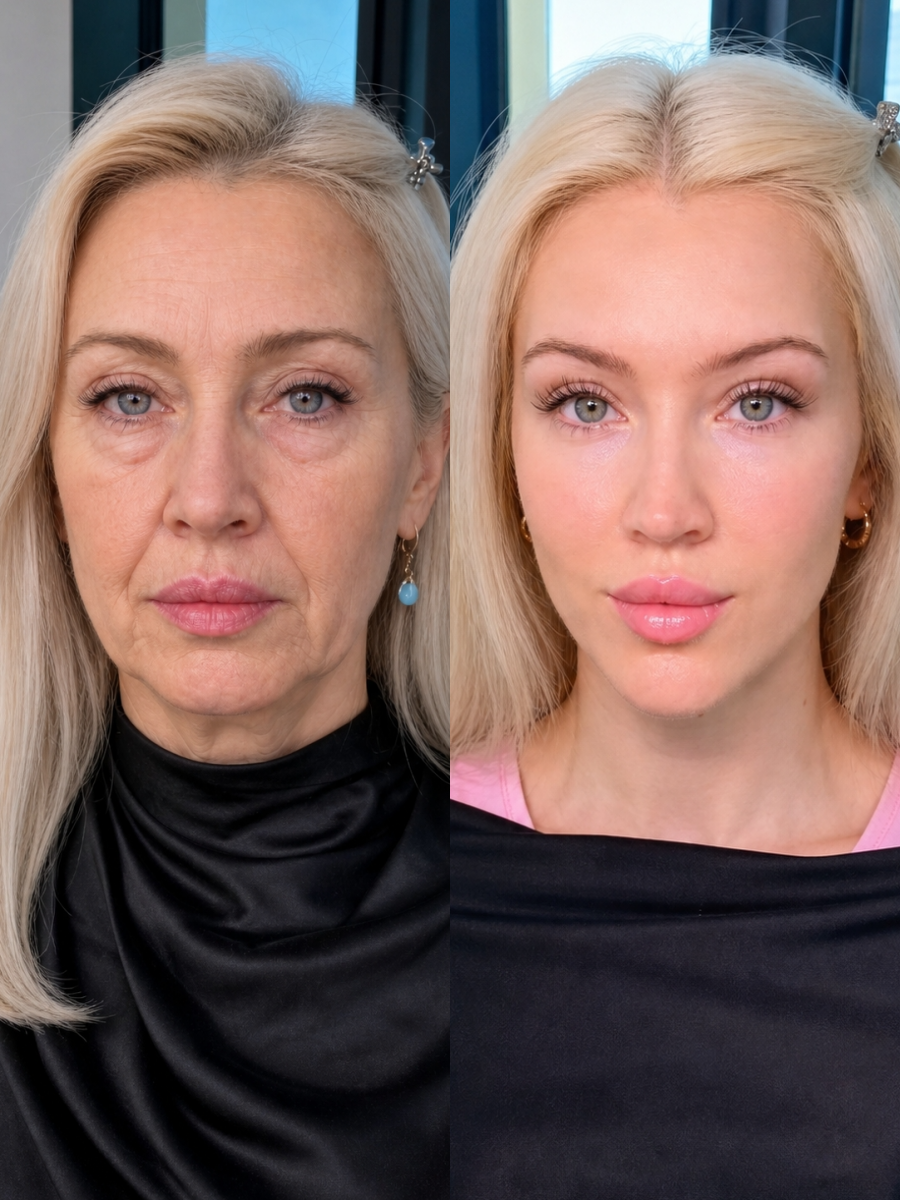
A deep plane facelift is an advanced facelift technique that works beneath the more superficial facial layers. Instead of relying mainly on skin tension, the surgeon releases and repositions deeper support structures so the face can be lifted in a more natural direction.
This is why many patients researching modern facial rejuvenation search for deep plane facelift: they want improvement in the midface, jawline, and neck, but they do not want a tight or artificial look.
What Does “Deep Plane” Mean?
The face is made of multiple layers: skin, fat, fascia, muscles, retaining ligaments, and deeper support structures. In many traditional facelift approaches, the skin and superficial layers are lifted separately. In a deep plane approach, the surgeon works beneath the SMAS layer and releases key retaining structures to allow deeper tissue movement.
The purpose is not simply to pull harder. The purpose is to mobilize the correct layer so that the lift can look softer, more stable, and more anatomically natural.
Why Can Deep Plane Results Look More Natural?
A pulled look often happens when the skin carries too much tension. Deep plane philosophy aims to reduce that problem by shifting support into deeper tissues. When the deeper structures are repositioned and the skin is closed with less tension, the result may appear more natural and less stretched.
This is especially relevant for patients with midface descent, jowls, heavier lower-face laxity, and neck aging. These concerns are often structural, not just skin-related.
Is Deep Plane Facelift the Same as Tri-Plane Facelift?
Not exactly. Tri-Plane Facelift is Dr. Miles’s broader planning system. Deep plane facelift is one possible surgical technique within a structural rejuvenation strategy.
Some patients need a deep plane approach. Others may need a different level of lifting, fat repositioning, neck refinement, or a more conservative plan. The best technique should be chosen after anatomy is evaluated, not because one term is popular online.
Who May Benefit from a Deep Plane Facelift?
Patients who may benefit often have visible lower-face descent, jowls, midface flattening, neck laxity, or a face that looks tired because deeper support has shifted downward.
It may also be considered for selected patients who previously tried non-surgical lifting or thread lifting but did not get durable structural improvement. However, previous procedures, scars, filler history, skin quality, and general health all need to be reviewed carefully.
What About Recovery?
Deep plane facelift is still surgery, and recovery should be taken seriously. Swelling, bruising, tightness, numbness, and gradual refinement are normal parts of the healing process. Many patients need a clear plan for the first few weeks, especially if they travel internationally.
For planning details, read our facelift recovery timeline for international patients.
Why Surgeon Selection Is Important
The deep plane layer is anatomically demanding. A good result depends on surgical judgment, facial nerve awareness, tissue handling, incision planning, and postoperative care. The term “deep plane” should not be treated as a marketing phrase alone.
Dr. Miles evaluates each patient through facial anatomy, aging pattern, and aesthetic goals. The aim is to create a refined plan that supports natural expression rather than a standardized face-changing result.
If you want to know whether deep plane facelift or another Tri-Plane Facelift approach is more suitable for your face, start with an online consultation.
Want to learn more?
Contact us for a personalized consultation plan.
Book a 1-on-1 Online Consultation